
Essential Beginner Piano Practice: What to Master First
The Foundation: Getting Started with Beginner Piano Practice
Effective beginner piano practice essentials bring both excitement and fulfillment. Those 88 keys represent endless possibilities, but where should your piano practice begin? At Tonioli, we believe that structured beginner piano practice creates lifelong musicians. Your first steps in piano practice aren’t just about learning notes—they’re about building a relationship with music that brings joy and connection.
Understanding Your Piano’s Layout and Key Names for Beginner Piano Practice
The piano keyboard follows a simple pattern essential for piano practice. White keys represent natural notes (A through G), while black keys appear in groups of two and three. Find middle C—typically near the center of your keyboard and a crucial starting point. The white key to the left of any group of two black keys is always C. Once you can identify C, other white keys follow alphabetically: C, D, E, F, G, A, B, then back to C. Spending time exploring the keyboard is fundamental to effective beginner piano practice.
Proper Posture and Hand Position for Successful Beginner Piano Practice
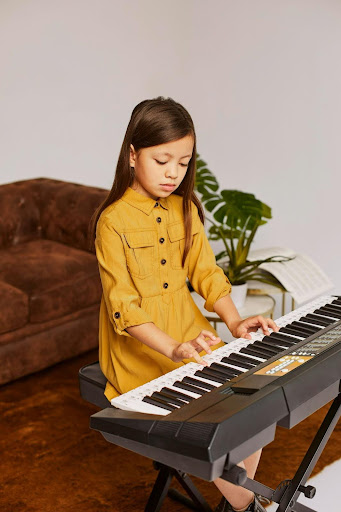
Position your bench so your forearms are parallel to the floor when your fingertips rest on the keys—a critical element of piano practice. Sit tall with a straight back. Your feet should touch the floor. Shape your hands as if holding a small apple, with gently curved fingers. Your wrists should be level, neither dropping below nor rising above your hand. Every piano practice session should reinforce these proper techniques.
First Musical Skills Every Beginner Piano Practice Should Include
Simple Finger Exercises for Daily Beginner Piano Practice
Try this five-finger pattern during your piano practice: Place your right-hand thumb on middle C and each subsequent finger on the next white key (C-D-E-F-G). Practice playing each note in sequence, up and then back down. Focus on even tone and timing—hallmarks of quality piano practice. For finger independence, try holding down four fingers while lifting one finger at a time. Just 5 minutes of technical piano practice daily creates significant improvement.
Learning to Read Basic Music Notation in Your Beginner Piano Practice
Piano music uses two staves—incorporate this knowledge into your piano practice sessions. The upper staff (treble clef) is typically played by the right hand and the lower staff (bass clef) by the left hand. For the treble clef, the spaces spell FACE, while the lines can be remembered with “Every Good Boy Does Fine.” Middle C connects these two worlds, a concept to master in early piano practice.
Playing Your First Five-Finger Melodies During Beginner Piano Practice
Five-finger melodies should form the core of your piano practice. These pieces stay within a position where each finger covers one note. Start your piano practice with pieces using just three notes, then gradually expand to using all five fingers. Some timeless first melodies for piano practice include “Hot Cross Buns,” “Mary Had a Little Lamb,” and simplified versions of “Ode to Joy.”
Creating a Beginner Piano Practice Routine That Sticks
How Long Should Beginner Piano Practice Last Each Day?
A focused 10-15 minutes of piano practice yields better results than a distracted hour. Include a mix of technical work, review of previous material, work on new challenges, and musical play in your piano practice. Consistency in piano practice matters more than duration. Five days of short piano practice sessions will develop your skills more effectively than one marathon weekend session.
Making Beginner Piano Practice a Joyful Family Activity
Hold mini-concerts where you share what you’re learning in your piano practice. Invite family members to participate in your beginner piano practice sessions. Use duet books where the beginner part uses just a few notes while a partner plays a more complex accompaniment. At Tonioli, we’ve witnessed how beginner piano practice strengthens family bonds across generations.
Celebrating Small Victories in Your Beginner Piano Practice Journey
Keep a beginner piano practice journal noting skills mastered and problems solved. Record yourself playing the same piece at different stages of your piano practice to hear your improvement. Remember that progress in piano practice isn’t always linear. Each challenge overcome in your piano practice teaches perseverance and growth.
Next Steps: Advancing Your Beginner Piano Practice
Simple Songs That Build Confidence in Your Beginner Piano Practice
After mastering five-finger positions in your beginner piano practice, look for pieces with hand position changes and simple chords. Folk songs and hymns often feature straightforward melodies ideal for advancing piano practice. Look for music that speaks to your personal interests to increase motivation for regular piano practice.
When to Consider Finding a Teacher for Your Beginner Piano Practice
Consider seeking a teacher when your piano practice habits are consistent or when you encounter obstacles you cannot resolve independently. A good teacher can enhance your piano practice by observing your unique strengths and challenges, providing customized guidance that connects technical development with musical expression.
With these beginner piano practice fundamentals, you will build piano skills that last a lifetime while enjoying the rewarding journey of musical growth.
Your Musical Journey Begins
The first steps at the piano set the foundation for your entire musical future. Begin with curiosity, practice with joy, and celebrate each small victory. Remember that every great pianist once sat exactly where you are now—at the beginning of a beautiful lifelong journey with music.
Want to bring more music and meaning into your life?
Explore Tonioli’s piano sheet music, inspirational books, and heart-centered compositions. Whether you’re a music teacher, parent, or performer, there’s something here to uplift your soul.
Visit Tonioli.com and find the soundtrack to your journey.
Frequently Asked Questions
- Do I need to learn to read music right away?
While not immediately necessary, learning basic notation alongside playing creates a stronger foundation for your musical journey and prevents limitations later on.
- Is it better to start on a keyboard or acoustic piano?
Either can work beautifully for beginners. What matters most is having weighted keys and regular access to practice. Many musical journeys have begun on simple keyboards before transitioning to acoustic pianos.
- At what age can children begin learning piano?
Most children can begin meaningful piano exploration around age 5-7, though every child’s readiness differs. Look for interest in music, ability to focus for short periods, and finger dexterity as indicators.
- How can I keep my child motivated to practice piano?
Create a joyful, pressure-free environment where music becomes family time rather than a chore. Celebrate small wins, play musical games, and occasionally practice together to nurture their lifelong love for music.
- How soon will I be able to play my favorite songs?
Within 3-6 months of consistent practice, many beginners can play simplified versions of familiar melodies. The journey to playing advanced compositions takes time, but each step brings its own musical satisfaction.
- What if I make lots of mistakes when practicing?
Mistakes are where the real learning happens! Approach them with curiosity rather than frustration. Slow down, identify the challenge, work through it patiently, and remember that every accomplished pianist began exactly where you are now.
Key Takeaways
- Start with proper posture and hand position
- Build finger strength through daily short technical exercises
- Learn basic music notation alongside keyboard geography
- Begin with simple five-finger patterns before advancing to full songs
- Establish a consistent, joy-focused practice routine
- Celebrate every small achievement to build lasting motivation