
How to Convert Piano Audio to Sheet Music
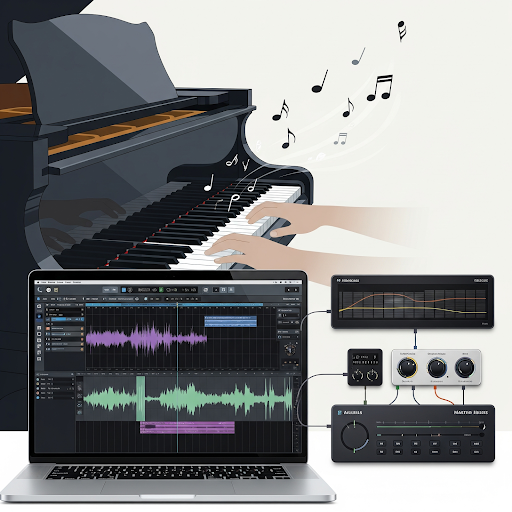
Convert Piano Audio: Best Audio Formats and File Conversion Tools
Have you ever captured a beautiful piano melody—perhaps your child’s first composition, a loved one’s favorite hymn, or your own moment of inspiration—and wished you could convert piano audio into notes on a page? The desire to convert piano audio often comes from a deep emotional connection to the music. Whether it’s a spontaneous tune or a carefully crafted piece, the decision to convert piano audio is more than a technical task—it’s an act of preservation and love.
When we convert piano audio, we give those fleeting moments structure and permanence. To convert piano audio is to honor the creativity behind it and to make sure it can be played, studied, and remembered by future generations. Families may want to convert piano audio to celebrate milestones, while musicians might convert piano audio to refine their compositions or prepare for performance.
No matter the reason, when we convert piano audio, we’re creating a musical legacy. Choosing to convert piano audio transforms sound into something tangible—notes on a page that tell a story, evoke a memory, or inspire someone new to play. So if you’re holding on to a special recording, now may be the perfect time to convert piano audio and turn inspiration into enduring music.
The Spiritual Journey of Transforming Sound into Notation
Why Preserving Your Piano Performances Matters for Family Legacy
Music has always been a vessel for our deepest emotions and spiritual connections. When a melody emerges from your heart through your fingertips, it carries something uniquely yours, a testimony of your journey, faith, and experiences. By converting these audio moments into sheet music, you’re creating a musical heirloom that can be passed down through your family.
The Beautiful Connection Between Sound and Symbol in Music
There’s something almost miraculous about how musical notation captures the invisible. The staff lines, notes, and dynamic markings are like a sacred language that bridges time and space. When we convert piano audio to sheet music, we’re participating in this age-old tradition of making the fleeting permanent.
Modern Methods to Convert Piano Audio to Sheet Music
Digital Music Recognition Software Options for Families
Today’s technology offers several wonderful options for families wanting to preserve their piano music. Programs like AnthemScore, ScoreCloud, and Transcribe! use artificial intelligence to listen to your recordings and translate them into readable notation. Many of these programs offer free trials or basic versions, making them accessible for family projects.
Professional Transcription Services: When to Invest
When the time comes to convert piano audio into written sheet music, professional transcription services can be an excellent choice, especially for pieces with emotional or technical complexity. If you’ve composed a wedding processional or recorded a medley of family favorites, the need to convert piano audio with accuracy becomes essential. These services use trained ears and musical expertise to convert piano audio into notated scores that capture every nuance and dynamic detail.
Though it requires financial investment, hiring a professional to convert piano audio ensures the emotional essence of your performance is preserved. Many transcriptionists offer consultations to better understand your musical intent before they convert piano audio into sheet music.
When you’re ready to convert piano audio with precision and purpose, choosing a human expert over an automated tool may yield the most satisfying result.
Community Resources for Piano Transcription Assistance
Sometimes, the best way to convert piano audio is by turning to your local network. Music teachers, church pianists, or university music students often have the skills needed to convert piano audio informally or as part of a side project. Whether you’re working on a school recital piece or a spontaneous home recording, asking someone you trust to convert piano audio can save time and offer educational insights.
Many communities also have online forums, social media groups, and subreddits where musicians volunteer to convert piano audio or offer transcription advice. These platforms not only help you convert piano audio, but they also foster shared learning and creative collaboration. Engaging with others as you convert piano audio often transforms the task into a more meaningful and connected experience.
Whether you go the professional route or tap into community support, your effort to convert piano audio into written music ensures your melodies live on, ready to be played, shared, and cherished.
Step-by-Step Guide to Converting Your Piano Recordings
Preparing Your Audio for the Best Conversion Results
The quality of your original recording significantly impacts your sheet music results. Position your recording device (even a smartphone) about 2-3 feet from the piano, minimize background noise, and ensure even playing without excessive pedaling.
Walking Through the Conversion Process Together
- Record your piano piece with the best quality possible
- Import your audio file into your chosen conversion software
- Follow the program’s instructions to process the audio
- Review the initial transcription with patience and grace
- Save your sheet music in a shareable format (PDF or MusicXML)
Remember that this process may take several attempts—approach it as a labor of love rather than a task to complete.
Troubleshooting Common Issues with Piano Transcription
Even the best software sometimes misinterprets complex harmonies or rhythms. If your conversion misses notes or rhythms, try slowing down difficult passages in your original recording or breaking complex pieces into smaller segments. Remember that persistence in refining your music mirrors how we grow in other areas of life—through dedicated practice and patience.
Refining Your Sheet Music After Conversion
Editing Tools to Perfect Your Transcribed Piano Pieces
Once you have your initial sheet music, programs like MuseScore or Finale offer free or affordable ways to edit your notation. You can correct wrong notes, adjust rhythms, and add expression markings that capture the true spirit of the performance. This editing process often becomes a beautiful journey of musical discovery, deepening your appreciation for the original piece.
Adding Personal Touches to Your Family’s Musical Legacy
Make your transcription truly special by adding personalized elements—dedication notes, the story behind the piece, or scripture verses that inspired the music.
Want to bring more music and meaning into your life?
Explore Tonioli’s piano sheet music, inspirational books, and heart-centered compositions. Whether you’re a music teacher, parent, or performer, there’s something here to uplift your soul.
Visit Tonioli.com and find the soundtrack to your journey.
Frequently Asked Questions
1. What software is best for beginners wanting to convert piano audio to sheet music?
ScoreCloud is often recommended for beginners due to its intuitive interface and straightforward process. You simply record or import your audio, and the software does the heavy lifting. Remember that even beginners can preserve beautiful music—technical expertise isn’t required to share your musical gifts.
2. How accurate are piano audio to sheet music conversion programs?
Most programs achieve 70-90% accuracy for clear, single-line melodies. Complex harmonies, fast passages, or recordings with background noise present greater challenges. View the software as your helpful assistant rather than perfect transcriber, and be prepared to make adjustments with love and care.
3. Can I convert old family piano recordings to sheet music?
Yes, though vintage recordings require additional preparation. Consider using audio cleaning software to reduce hiss or crackle before attempting conversion. These older recordings often hold the most precious family memories and are well worth the extra effort to preserve.
4. Do I need music theory knowledge to convert piano audio to sheet music?
While basic music reading skills help with editing, many conversion tools are designed for users without extensive theory background. The process itself can become a wonderful learning opportunity for families to explore music notation together, growing in knowledge as you preserve your musical heritage.
5. How can I share my converted sheet music with my church or community group?
Print physical copies for your choir or praise team, or share digital PDFs via email. For broader sharing, consider community platforms like MuseScore.com. Always be mindful of copyright if transcribing published works—your own original compositions and traditional hymns in the public domain are safest for sharing.
Key Takeaways
- Converting piano audio to sheet music preserves your musical gifts for family generations
- Several accessible software options exist for different skill levels and budgets
- Quality of recording directly impacts the accuracy of your sheet music conversion
- Piano transcription builds deeper appreciation for music theory and composition
- Sharing transcribed music strengthens community bonds and musical fellowship