
What First Piano Lessons Teach: Building a Joyful Musical Foundation
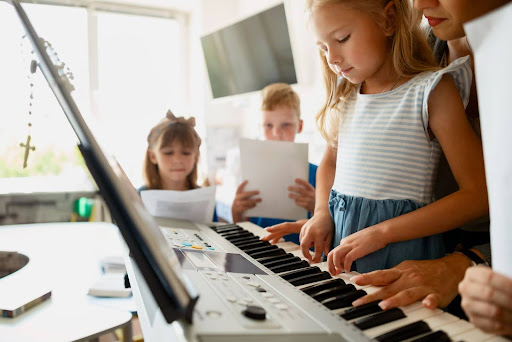
First Piano Lessons: Mastering Posture and Hand Position
First piano lessons mark the start of a beautiful journey—one that can bring lifelong joy, personal growth, and a deeper connection to the language of music. As parents and new students approach these first piano lessons, many wonder what to expect and how teachers build that crucial foundation. The initial first piano set the tone not just for technical development, but for nurturing a relationship with music that can flourish for decades to come.
Creating a Physical Connection with the Instrument in First Piano Lessons
Most piano teachers begin their first piano lessons with something seemingly simple yet profoundly important: how to sit at the piano. This foundation in first piano lessons creates the physical foundation for everything that follows. Teachers typically guide students to sit at the middle of the keyboard, with feet flat on the floor or on a footstool for younger children. The bench height should position arms approximately parallel to the floor, neither reaching up nor sloping down toward the keys.
Teachers often use gentle, accessible language rather than technical terms during these early piano lessons. They might ask young students to sit “tall like a tree” or “strong like a superhero” rather than using words like “posture” and “alignment.”
Why Proper Positioning Matters in First Piano Lessons Teach for Long-Term Growth
Hand position receives similar attention in first piano lessons. Teachers guide students to create a natural curve in their fingers—often described as “holding a small apple” or forming a “hand dome.” This curved shape taught in first piano lessons allows for both strength and flexibility while preventing tension that could lead to discomfort or limitations later on.
Most importantly, first piano lessons help students understand the “why” behind these positions—how they create the conditions for beautiful playing while preventing potential issues down the road. When students understand that good technique isn’t arbitrary but purposeful, they’re more likely to incorporate these fundamentals consistently in their first piano lessons and beyond.
Many teachers incorporate stretching exercises or hand games into first piano lessons that make these concepts playful rather than rigid. These activities in first piano lessons build awareness of hand muscles that many beginners, especially young ones, haven’t previously needed to control with such precision.
Finding Musical Language in First Piano Lessons Teach: Notes, Keys, and First Melodies
Meeting Middle C and Its Neighboring Notes in First Piano Lessons Teach
With comfortable positioning established, most first piano lessons introduce the geography of the keyboard, beginning with what becomes a new pianist’s first “home base”—middle C. This central note introduced in first piano lessons provides an anchor point from which students can explore outward in both directions.
Rather than overwhelming beginners with all 88 keys at once, thoughtful teachers typically focus on a small group of notes surrounding middle C during first piano lessons. This limited range in first piano lessons allows students to build confidence through mastery rather than confusion through excess. Many first piano lessons begin with just five notes (C-D-E-F-G) for each hand, creating a comfortable terrain for early explorations.
Teachers often use visual and tactile cues in first piano lessons to help students recognize these notes—pointing out patterns of black keys that make white keys identifiable, or using colorful stickers for very young beginners. These temporary aids in first piano lessons build spatial awareness of the keyboard that eventually becomes instinctive.
Simple Melodies That Build Confidence and Joy in First Piano Lessons Teach
With basic notes introduced, first piano lessons teach that bring these abstract concepts to life through simple melodies. The best pieces for first piano lessons accomplish something remarkable—they sound complete and satisfying while using just a few notes.
What makes these early songs particularly valuable in first piano lessons isn’t their simplicity, but how they make students feel. When a beginner completes a piece during first piano lessons—even one using just three notes—they’ve experienced the full cycle of learning, practicing, and sharing music.
Rhythm and Expression: Bringing Music to Life in First Piano Lessons
Feeling the Pulse Through Movement and Counting in First Piano Lessons Teach
Alongside notes, first piano lessons introduce the essential element that transforms individual sounds into music: rhythm. Rather than beginning with abstract counting, many first piano lessons engage the body first, having students clap, march, or sway to establish the feeling of musical pulse.
Counting systems (like “1-2-3-4” or “Ta-Ta-Ta-Ta”) typically follow this physical experience in first piano lessons, connecting the felt sensation of rhythm to specific language. This progression from physical to verbal in first piano lessons helps students internalize rhythm rather than approaching it as merely mathematical.
Early Dynamics: The Art of Musical Expression in First Piano Lessons Teach
Even in the very first piano lessons, thoughtful teachers introduce the concept that music isn’t just about playing the right notes, but how we play them. Simple dynamics (loud/soft) in first piano lessons bring emotional life to even the most basic melodies.
Teachers often use storytelling in first piano lessons to introduce expressive playing—a piece might represent a giant stomping (forte) followed by a mouse tiptoeing (piano). These imaginative frames in first piano lessons help students understand that music communicates feelings, not just information.
Beyond the Keys: Nurturing a Lifelong Musical Journey After First Piano Lessons Teach
Building Practice Habits With Heart for Continuing First Piano Lessons Teach
First piano lessons teach that nearly always include guidance on how to practice at home. Rather than focusing on time requirements, effective teachers emphasize the quality and consistency of practice. For young beginners in first piano lessons, 10-15 minutes of focused daily practice often yields better results than longer, sporadic sessions.
Teachers help both students and parents understand that practice between first piano lessons isn’t just about repetition but about thoughtful engagement. During first piano lessons, they provide specific practice strategies tailored to the student’s age and learning style—perhaps circling challenging measures, creating practice games, or using simple practice journals to track progress between first piano lessons.
Celebrating Early Wins: The Foundation of Motivation in First Piano Lessons Teach
Effective first piano lessons always include moments of celebration and recognition. Thoughtful teachers acknowledge effort, improvement, and courage, not just perfect execution. First piano lessons help students recognize their progress, building an internal sense of accomplishment that fuels continued exploration.
Many teachers include opportunities for students to share what they’re learning in their first piano lessons, whether through informal performances for family members, studio gatherings, or simple recordings. These sharing moments in and beyond first piano lessons help beginners identify as musicians from the very beginning of their journey.
Want to bring more music and meaning into your life?
Explore Tonioli’s piano sheet music, inspirational books, and heart-centered compositions. Whether you’re a music teacher, parent, or performer, there’s something here to uplift your soul.
Visit Tonioli.com and find the soundtrack to your journey.
Frequently Asked Questions
- Should parents sit in on their child’s first piano lessons?
Most teachers welcome parent participation in early lessons, creating a supportive family environment where parents learn how to guide practice at home. This partnership between teacher, student, and family creates the strongest foundation for musical growth and enjoyment.
- Do piano teachers start with reading music or playing by ear?
Most teachers balance both approaches, introducing basic notation while also developing listening skills, creating well-rounded musicians who connect deeply with music. This dual approach respects different learning styles while developing complementary musical abilities.
- How quickly will a beginner learn to play recognizable songs?
With consistent practice, most beginners play simple, recognizable melodies within a few weeks, though mastery comes through patient development over months. The focus in early lessons is on building a strong foundation rather than rapidly advancing through material.
- What qualities should I look for in a first piano teacher?
Seek a teacher who balances technical foundations with joy, connects personally with students, and adapts their approach to individual learning styles and interests. The best first teachers create an environment where music becomes something students want to explore rather than merely something they’re taught.
- Is there an ideal age to start piano lessons?
While children often start between ages 5-8, piano can be learned joyfully at any age—the most important factors are interest, supportive guidance, and consistent engagement. Different ages bring different advantages, with younger children often absorbing fundamentals naturally while older beginners bring focus and understanding.
Key Takeaways
- Piano teachers typically begin with proper posture and hand position as the foundation for all future playing
- Early lessons focus on developing a physical and emotional connection with the instrument
- Middle C and neighboring notes create the first “home base” for new pianists to explore
- Rhythm and counting are introduced through accessible, movement-based activities
- Simple melodies that sound complete and satisfying build confidence and motivation
- Teachers balance technical fundamentals with experiences of musical joy and expression